
Common Misconceptions About Moving Used Household Goods to or From Mexico

If you are planning to move your used household goods between the United States or Canada and Mexico, you may encounter a surprising amount of information about how the process works that turns out not to be correct for your particular situation. Here are some of the reasons:
- Some of it is simply wrong. For example, someone may very confidently answer a question on Facebook based on incomplete or incorrect information.
- Some of it may have been true in the past but is no longer true. Customs rules, requirements and procedures can change.
- Some of it applies only to certain people or certain types of moves, which may not apply to you in your situation. For example, are you a temporary resident, a permanent resident or a Mexican citizen? The information for your move may change based on the answers to these and other criteria.
- While some information may be technically correct, how a rule or procedure is applied in practice may differ from how someone described it. That person may not know this because they may not have recently completed a move substantially similar to yours.
- And sometimes a procedure required by a particular moving company is mistakenly assumed to be required by all moving companies and in all situations.
As a result, not all misconceptions are 100% wrong. Some may be wrong only in particular circumstances. But those circumstances may be yours, which makes it very important for you to know which information applies to you and which does not.
Best Mexico Movers has heard lots of misconceptions about how the process works and we’re in a good position to separate these misconceptions from reality and share what we have learned with you. The reason is that, since 2018, we have helped more than 1,000 households move to or from Mexico, so we know from firsthand experience.
Below is a list of the most common misconceptions and partial misconceptions we’ve heard and how to evaluate them.
Misconception #1:
It Is Cheaper to Sell or Give Away Your Belongings and Replace Everything After You Move Than to Pay to Move Them
Fact: Depending on what you would move, this misconception may actually be true if you look at it only from a financial perspective.
For example, if everything you want to move could be replaced for $10,000 by buying replacement items after you arrive, but it would cost $12,000 to move those same things, it is true that you could save $2,000 by selling or giving everything away before you move and buying replacement items after you move.

But that calculation assumes several other things are also true:
Your possessions have zero sentimental value to you, so the only thing that matters to you is what they would cost to replace.
You can actually find comparable replacements where you are moving—not just the same type of item, but the quality, style, size, color, comfort and other characteristics that matter to you.
The time, transportation and effort required to find and purchase those replacements have no value to you.
If you are moving from the U.S. or Canada to Mexico, the things you want will actually be available in Mexico at the prices you assumed. Some things that are easy to find in the U.S. or Canada can be more difficult or expensive to find in Mexico, and needing to import them later could put you back into the situation you were trying to avoid, potentially at an even greater cost. If you are moving from Mexico to the U.S., you should likewise check actual replacement prices before making your decision.
There is another more nuanced and important part of the calculation that is easy to overlook: the cost of moving household goods does not necessarily increase in direct proportion to the amount you move.
For example, let’s assume you initially decide that you want to move 1,000 cubic feet and the price to move that 1,000 cubic feet is $9,500. However, let’s also assume that the minimum price for that move is $8,000 for a shipment for any amount moved up to 600 cubic feet. Here’s how the prices break down:
200 cubic feet = $8,000
400 cubic feet = $8,000
600 cubic feet = $8,000
1,000 cubic feet = $9,500
That means the price is $8,000 whether you move 200 cubic feet, 400 cubic feet or the full 600 cubic feet and the price to move 1,000 cubic feet is $9,500.
Now assume that you initially decide to move only 200 cubic feet, containing the possessions that are most important to you. You would still pay the $8,000 minimum price.
If moving 200 cubic feet costs $8,000 and moving 1,000 cubic feet instead would cost $9,500, part of the relevant decision changes.
You are no longer deciding whether it is worth paying $9,500 to move all 1,000 cubic feet.
You have already decided that the 200 cubic feet containing your most important possessions are worth paying $8,000 to move.
The question now becomes:
Is it worth another $1,500 to bring the additional 800 cubic feet of your household goods rather than sell, give away and eventually replace them?
For many people, looking at the decision this way produces a very different answer.
This is also why we don't believe there is one correct answer to whether you should move your household goods or replace them. The answer depends on what you own, what those things mean to you, what they would actually cost to replace, what is available at your destination, how much you want to move and how the cost of your particular move changes as the size of your shipment changes.
You can read our pricing with examples here and you can read about how to lower the cost of your move here.
You can read our answer to “How much of my household goods should I move to Mexico?” here and “Things you cannot get in Mexico and should bring with you” here.
Here is an article on what to take and what to leave.
Misconception #2:
Your Household Goods Have to Be Transloaded Multiple Times
Fact: In this article, when we use the term “transloading,” we mean unloading your household goods from a truck or trailer into a warehouse and later loading them from the warehouse onto another truck or trailer.
We distinguish transloading from “crossloading,” which means transferring your household goods directly from one truck or trailer to another without first moving them into a warehouse.
The terminology is not completely consistent throughout the transportation industry, and some companies use the term “transloading” more broadly. We make the distinction because, from our clients’ perspective, there is an important practical difference between having your household goods unloaded into and later out of a warehouse as compared with transferring them directly from one truck or trailer to another.
In our experience, the vast majority of international movers handling used household goods to or from Mexico transload their customers’ household goods during the move, often multiple times.
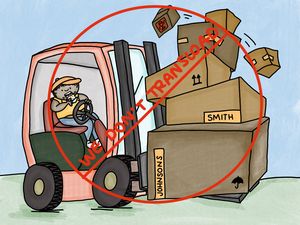
However, transloading is not a necessary part of every household goods move across the Mexican border. Whether and how often your household goods are transloaded depends on how your mover structures your move.
For example, the standard Best Mexico Movers process is not to transload your household goods multiple times. Instead, we crossload your household goods just once, at the border.
Here’s how we do it. The truck or trailer carrying your household goods on one side of the border is positioned against the same dock or back-to-back with the truck or trailer that will carry them on the other side, and your household goods are transferred directly from one to the other without being moved into a warehouse in between.
The process can differ in some limited circumstances, including certain moves through the San Diego/Tijuana area.
The important point is that repeated transloading is a transportation-company practice or logistics choice used in many moving systems. It is not something that every international household-goods move requires.
Misconception #3:
Your Household Goods Have to Be Consolidated With Other Shipments
Fact: “Consolidation” means combining shipments belonging to two or more customers in the same truck or trailer. Movers may use consolidation for economic or logistical reasons, but it is not the only way to transport household goods internationally.
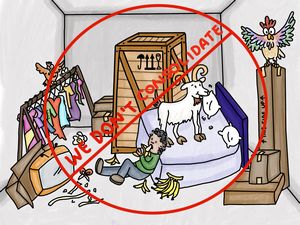
An international move does not necessarily require your household goods to be consolidated with other customers' shipments.
For example, Best Mexico Movers uses an exclusive-use model in Mexico. We do not combine your household goods with another customer's household goods in the truck or trailer transporting your shipment. That truck or trailer is for your exclusive use.
You can read about our process here.
Misconception #4:
You Have to Figure Out Most of the Process Yourself
Fact: It is true that you have responsibilities as the owner and importer of the household goods and there is paperwork you will need to sign (sometimes in Spanish), but that does not mean you have to figure out the entire international moving and customs process without help or with very little help.
An international household goods move involves more than loading a truck at one home and unloading it at another. Depending on your origin and destination and other circumstances, there can be inventories, customs documents, immigration or residency documents, customs brokers, border procedures and restrictions on what can be imported.
Some documents and information have to come from you because you are the owner and importer of the household goods. Other parts of the process can be coordinated by your international mover and licensed customs professionals.
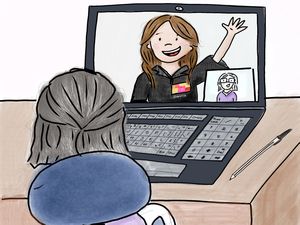
For example, when Best Mexico Movers handles your move, we assign you to a Personal Moving Assistant (PMA). Your PMA will create a checklist for you with the major steps and events in your move, so you know what to expect and important tasks are not overlooked. If you don’t speak Spanish, we translate Spanish documents for you and explain them to you in English so you can understand what you’re signing. And we can talk with you in English. (All of our PMAs are bilingual and bicultural. You can read about them here.)
Your PMA will work with you on the information and documents needed, help you prepare for the customs process, coordinate the transportation and customs portions of the move, and explain what you need to do at each stage.
You still need to understand the process and the documents you are signing. But you should not have to become an expert in international household goods transportation in order to move your belongings across the border.
Misconception #5:
Household Goods Shipments Crossing the U.S.-Mexico Border Have to Go Through Laredo
Fact: Laredo is an important U.S.-Mexico commercial crossing, but moving used household goods across the border does not necessarily mean the shipment has to cross there.
It may be better to cross at some other place, depending on the origin, destination, customs arrangements and other circumstances of the move.
Unlike some movers, Best Mexico Movers handles moves through more than one border region. Depending on the move, we may use Laredo, the El Paso/Ciudad Juárez area or the San Diego/Tijuana area.
Why does that matter?
Consider what happens when moving household goods from Phoenix to Mazatlán. Transporting the additional 600 miles from El Paso to Laredo just in the U.S. may not make the most economic sense. With a different origin-destination pairing, however, routing the shipment through Laredo may make more sense.
There are other things to consider when choosing where to clear customs that have nothing to do with geographical distance but do have to do with customs requirements.
This may be important in your situation or it may not. The point is that it is something to consider.
But with regard to this issue, the important question is therefore not, “Does every shipment have to go through Laredo?”
It is: Which border crossing makes sense for this particular move, and is it the best place to handle the required customs process?
Misconception #6:
Everyone Moving Used Household Goods to Mexico Uses the Same Menaje de Casa Process
Fact: There is not one identical procedure that applies to everyone. The requirements can differ depending upon your nationality, Mexican immigration or residency status and other circumstances.
For example, Mexican government guidance distinguishes between permanent residents and temporary residents. A qualifying permanent resident may import a household goods shipment under a definitive duty-free regime, while temporary residents and temporary-resident students may qualify for temporary importation tied to their immigration status.
Mexican nationals returning to Mexico can also be subject to different requirements.
This is another reason why advice from another person who moved to Mexico may not apply to you even if that person's move sounds similar to yours.
Your nationality, residency status, timing and other circumstances matter.
You can read about the menaje de casa here.
Misconception #7:
If You Own Something, You Can Automatically Include It in Your International Household Goods Shipment
Fact: Ownership by itself does not determine whether an item can be imported as part of a household goods shipment to or from Mexico.
For a move into Mexico, the menaje de casa rules apply to qualifying household goods and personal belongings. Mexican government guidance describes household goods as items such as furniture, clothing, books, household electronics and other items for ordinary household use. Some items do not qualify as household goods under the menaje de casa process. Other items may be prohibited from importation or may be allowed only if additional requirements are met.
Likewise, U.S. citizenship does not give someone unrestricted authority to import anything they own when moving from Mexico to the United States.
U.S. Customs and Border Protection distinguishes household and personal effects from other goods and identifies categories that may be prohibited, restricted, dutiable or subject to additional requirements. Depending on the item, these can include firearms and ammunition, alcohol and tobacco products, plants and agricultural products, food and animal products, and goods intended for another person or for commercial use.
Before packing, ask someone who understands the applicable requirements and knows enough about your particular situation to give you an informed answer about what you can take.
Misconception #8:
If You're a U.S. Citizen Moving Back From Mexico, You Don't Need an Inventory or U.S. Customs Paperwork
Fact: Being a U.S. citizen does not eliminate the customs documentation required for an unaccompanied household goods shipment entering the United States.
U.S. Customs and Border Protection requires CBP Form 3299, Declaration for Free Entry of Unaccompanied Articles, for unaccompanied household and personal effects entering the United States.
CBP also requires information about the goods being imported. A complete inventory is treated as the packing list and must be provided to CBP upon request.
For someone who has already prepared an inventory for moving household goods into Mexico, the concept will be familiar: you need an inventory. The precise U.S. requirements and forms, however, are not exactly the same as the Mexican menaje de casa process.
When Best Mexico Movers handles a move from Mexico into the United States, we verify that our client qualifies, explain the process, help with the inventory, present the documents to be signed, and submit those documents to our customs broker and the U.S. government.
So the fact that your own household goods are returning with you to your own country does not mean there is no customs process. There is.
Misconception #9:
A Menaje de Casa Is Just a Packing List
Fact: Mexican authorities require a detailed list of the household goods covered by the menaje de casa process that has to be prepared in a certain way. This list is your inventory.
However, your inventory is just one component of a larger customs and documentation process.
Depending on your circumstances, the process can also involve your passport, Mexican visa or resident card, information concerning your residence in Mexico, applications or declarations, certification by a Mexican consulate when applicable, applications, declarations or other required signed statements, and the customs documentation used to import the shipment.
Your inventory describes your household goods and is part of the menaje de casa process, whereas the menaje de casa itself is the broader legal and customs framework under which qualifying household goods may be imported into Mexico.
The reason it is important to understand the difference is that while you may have your inventory done and your inventory may even be certified, this does not, in and of itself, mean that you qualify for the entire menaje de casa process.
Understanding that there is more to the menaje de casa process than the inventory can prevent a great deal of confusion and potential problems.
Misconception #10:
You Cannot Get Insurance or Other Protection for Your Household Goods When Moving to or From Mexico
Fact: Not only can you get protection on your shipment against loss or damage, but for the U.S. interstate portion of a move subject to federal household-goods regulations, your mover is required to provide you with a choice between two levels of liability protection. For the Mexican portion of the move, separate insurance may be available through an insurance company, but the insurance company decides which movers it is willing to work with.
What follows is not meant to be a comprehensive discussion of insurance coverage, but rather a very high-level explanation of some of the types of protection that may be available and why you should ask your mover what protection will apply to your household goods for your move.
For the U.S. interstate portion of a move subject to federal household-goods regulations, the mover must offer two levels of liability protection: Full Value Protection and Released Value. Full Value Protection provides substantially broader protection based on the replacement value of lost or damaged goods, subject to its terms and limitations. Released Value provides much less protection, limiting the mover's liability to no more than 60 cents per pound per article.
For example, if your 21-pound television were damaged and your claim were subject to Released Value but no more, your mover's maximum liability for that television would be $12.60 because of what it weighs, even if your television were worth substantially more.
Several of our clients have told us that they believed they had “insurance” with a previous mover when what they actually had was not insurance at all. Released Value is not insurance, and FMCSA specifically distinguishes these federally required levels of mover liability from separate insurance coverage. If a mover tells you that “insurance is included,” ask exactly what type of protection is being provided, what the limits are and who is responsible for paying a claim.
Some movers arrange separate insurance through an insurance company. In our experience, these policies can include coverage commonly described as Total Loss Only or broader coverage that may protect against loss of or damage to individual items, subject to the particular policy's terms, exclusions and deductible. Premiums are often based in part on the value you declare for your shipment, commonly referred to as its Declared Value. Whatever type of protection you are offered, ask your mover to explain in writing exactly what coverage or liability protection applies, what it costs and how the value of your household goods affects it.
Best Mexico Movers requires our clients to have insurance coverage for their household goods both in Mexico and in the U.S., and for those of our clients who we move from. Canada, for that portion of their move as well. We do this because we do not believe it would be responsible for us to transport a client's household goods without appropriate protection against loss or damage, regardless of which country we are in.
Insurance companies do not have to provide insurance through every moving company that wants to offer it. Like other businesses applying for commercial insurance, movers can be evaluated by insurance companies based on the risk they present. Depending on the insurer and the type of coverage, factors such as a mover's claims and loss history, the frequency or severity of damage to customers' household goods, and whether the mover is operating in compliance with applicable laws and requirements may affect an insurance company's willingness to work with that mover.
This is one reason we believe it is worth asking questions if a mover tells you that separate insurance coverage is not available. It does not necessarily mean there is anything wrong with the mover—there can be many reasons why a particular mover does not offer a particular type of insurance—but you should ask why insurance is not available and make sure you are comfortable with the answer.
We have encountered many customers who previously used movers that did not offer them separate insurance or even Released Value or another clearly identified form of protection against loss or damage.
This is another reason to ask questions rather than simply assume that because a mover does something a certain way, that is how it is supposed to be done in all circumstances. Ask exactly what protection against loss or damage applies to your shipment, who provides it, what it covers, what it costs, what it excludes, and how a claim would be handled.
Misconception #11:
You Aren’t Allowed to Pack Your Own Household Goods for a Move to or From Mexico
Fact: Whether you can pack your own household goods depends on what your mover allows. Not all movers handle this the same way. Some do not allow their clients to do any of their packing and loading, while others allow their clients to do more.
For example, Best Mexico Movers allows our clients to do some or all of their own packing and loading. Clients who don't want to do some or all of the work themselves can use local packers and loaders for the portions our clients prefer not to handle. For those of our clients who do some of their own packing, we work closely with our clients to help them pack properly and understand the requirements that apply to their particular move.
As an important related subject, doing your own packing and loading may affect which insurance coverage you're eligible for and, depending on the circumstances, may make a damage claim more difficult to establish. Before deciding to do some or all of your own packing or loading, make sure you understand how doing so will affect your coverage.
Misconception #12:
It Normally Takes a Week or More to Clear Customs at the U.S.–Mexico Border
Fact: Depending on how the mover structures the move, a shipment may spend a week or more in the overall border process, but that does not mean that it is customs clearance itself normally takes a week.
Based on Best Mexico Movers' experience with more than 1,000 household-goods moves to or from Mexico, our clients' customs importation process has never taken more than two calendar days once the shipment was in position to be cleared, and in more than 90% of our cases it was completed in one day or less. That includes shipments selected for customs inspection.
Then what could add to the overall time spent at or near the border?
Customs clearance can sometimes be delayed by circumstances such as government computer-system outages, an inspection, or an issue with documentation. Other delays around the border may have nothing to do with customs clearance itself. For example, a mover may be waiting for an available truck or driver. Or a delay may occur while the mover waits for additional shipments to arrive so it can consolidate multiple customers' shipments in the same truck or trailer for delivery.
Because Best Mexico Movers does not consolidate one client's household goods with another client's shipment, we do not wait at the border for another customer's shipment before continuing the move. This eliminates one potential source of delay from our process.
If someone tells you that “customs takes a week” (or even more), it's worth asking how much of that time will actually be spent clearing customs and how much will be spent waiting for something else, including another shipment your mover plans to consolidate with yours.
The Most Important Question to Ask When You Hear a "Rule" About Moving to or From Mexico
When someone tells you that something “has to” be done a certain way, ask:
Is this a government or customs requirement, or is it the way a particular moving company chooses to handle the move?
Sometimes the answer really is that customs requires it. Sometimes it is required because of your particular immigration status or the items you are importing. And sometimes it is simply the transportation or business model used by that mover.
How many moves like mine have you accomplished?
This can help you evaluate the experience of the person answering. Someone who has not handled a move similar to yours may not be familiar with a nuance that could be important to your move.
What happens if you’re wrong?
If the person answering will personally suffer the consequences if they answer incorrectly—for example, if the person answering is your mover—their answer carries more weight than the answer of someone who, if proven wrong, can simply say, ”Sorry.”
That's another reason to verify that the information you're relying upon is current and applies to your move. You should also consider whether the person answering your question has the experience and expertise to take those changes into account.
International household goods moves do involve rules, paperwork and border procedures. But understanding which requirements actually apply to your move—and which things are simply choices about how the move is performed or things that don’t apply to you—can make the process much easier to understand.
None of it is especially difficult. It just has to be done right.
Content modified September 25, 2026