
Everything You Need to Know About Using the Menaje de Casa to Move Your Household Goods to Mexico
By Best Mexico Movers, Published: October 5, 2026
What You Will Learn in this Guide
Click any topic below to jump to that section.
Introduction
In 2018, we started Best Mexico Movers (BMM) to specialize in moving our clients’ used household goods to and from Mexico.
And nothing is more central to doing that legally than understanding the menaje de casa.

So, naturally, when we started Best Mexico Movers, we searched for information on the menaje de casa so we could understand it.
What we found were many sources, statements and opinions, many of which disagreed with each other.
What we could not find was one comprehensive guide that brought all of these sources and practical considerations together into a format we could understand and trust.
The document you are reading now was designed to do that.
The reason we can write it now is that now, we know enough to do it. We can combine the cumulative experience of our BMM team of nine people; a history of working with eight licensed Mexican customs brokers who have personally processed BMM Menaje de Casa shipments, including two who each have approximately 25 years of experience handling Menaje de Casa imports; experience importing through three ports of entry; and, most importantly, more than 1,000 BMM Menaje de Casa shipments that cleared Mexican Customs and were delivered to our clients in Mexico.
Our experience is institutional rather than dependent on any one person. BMM team members work with clients on Menaje de Casa qualification, inventories and compliance throughout the moving process. Every BMM customs inventory is reviewed by the licensed Mexican customs broker responsible for the shipment, and whenever we have even slight uncertainty about an item or procedure, we ask the broker responsible for clearing that shipment at the applicable port.
All that real-world experience is in this guide.
Who This Guide Is For
This guide is for anyone who wants to understand the menaje de casa process, which usually means people who want to import their used household goods to Mexico.
It only addresses household goods moves originating in the United States and Canada. BMM does not claim that the procedures described here are the procedures used for moves originating anywhere else.
It is best to read this guide before you choose a mover, certify your inventory, put your belongings into storage, or begin the move or import process in any other way. The earlier you understand the process, the easier it will be for you to avoid problems that can become expensive or impossible to fix later.
How to Use This Guide
We used the cumulative experience and judgment of the people described above to create this guide, together with the underlying legal authority, current government and consular guidance, licensed customs-broker requirements, and BMM's own experience and operating policies.
Because this is intended to be a comprehensive guide to understanding the Menaje de Casa—not merely a description of what BMM does—we explain both the underlying authority and what happens in practice. Where an important issue involves more than one layer of authority or practice, we generally begin by describing the underlying authority, then explain relevant government or consular guidance and practical differences we have encountered, and finally explain how BMM handles the issue for our clients.
Each reader may have a different reason for using this guide. At one extreme, one reader may want, for example, to know the number of the relevant statute, so we include that information. Another reader (perhaps you) may just want practical advice on what you should do in order to get your precious household goods to Mexico. Hopefully, this guide will satisfy both types of readers and everyone in between.
If you are in this second category, feel free to skip over the more legal, technical descriptions and get right to what you want to know, which we tried our best to write in clear, simple language. (You can also skim by using the light blue headers.)
In the end, always keep in mind that there is a great deal of conflicting and sometimes inaccurate information online about the menaje de casa. Whatever any guide, website or document says—including this one—requirements can change and the particular facts of your move matter. We would never advise anyone to knowingly act contrary to Mexican law. For the practical handling of your shipment, our advice is to use a competent, trustworthy and honest mover working with an experienced licensed Mexican customs broker at the port through which your shipment will enter Mexico, and to follow the current requirements applicable to your shipment as communicated by your mover and licensed customs broker handling it.
This guide is not intended to provide legal advice. Requirements and operating practices can change.
What Is the Menaje de Casa?
The menaje de casa is the Mexican customs process that allows qualifying people relocating to Mexico to import their used household goods under special customs treatment. The precise legal regime depends on the importer's status.
For permanent residents and qualifying Mexican nationals, Article 61, section VII of the Ley Aduanera provides an exemption from foreign-trade taxes for qualifying household goods that were used during the importer’s residence abroad, subject to the deadlines and formalities in the regulations. For temporary residents and temporary-resident students, Article 106, section IV(b) provides for temporary importation of used household goods for the duration of the qualifying immigration status, including renewals, subject to the applicable requirements.
Some people use the words “menaje de casa” to mean only the required inventory or the certification. This is incomplete and can lead to misunderstandings. The inventory is an important document and part of the menaje de casa process, but that process also involves qualification, timing, the customs regime, supporting documents, the customs broker, the port of entry, and the actual customs clearance.
In practical terms, the menaje de casa process is intended for the importer's own used household belongings for ordinary personal or family use, not newly purchased merchandise, commercial inventory, or a disguised business import.
Who Qualifies to Use the Menaje de Casa?
The rules differ by status. BMM’s clients are Mexican nationals returning to Mexico, foreign permanent residents and foreign temporary residents. For purposes of this guide, the foreign residents BMM discusses are generally clients from the United States or Canada who have qualifying Mexican resident status. Tourists and ordinary visitors do not qualify for the BMM menaje de casa process described in this guide.
The documentation and customs treatment differ by status, as explained in the sections below.
Why Otherwise Reliable Sources Can Give Different Answers
The menaje de casa is not governed by one webpage or what one person says. Several layers of legal authority, administrative implementation, consular procedure, customs clearance, and mover policy can affect the same shipment.
The Layers of Authority and Practice
Understanding that these layers exist helps to explain why you can get different answers to the same question. However, you do not need to become an expert in every layer in order to use the Menaje de Casa.
If you’re not interested in understanding each of these layers (and not a lot of people are), you can skip these sections and still know what to do. A competent mover working with an experienced licensed customs broker should guide you through the requirements that apply to your shipment.
However, in order to be complete in explaining the menaje de casa and for those who are interested, we present the players in the following layers.
1. Ley Aduanera - the underlying customs statute
The Ley Aduanera is the principal federal customs statute. Article 61, section VII addresses the tax exemption for household goods of permanent residents and repatriated or deported Mexican nationals and expressly refers to goods used during residence abroad. Article 106, section IV(b) governs the temporary importation of used household goods belonging to temporary residents and temporary-resident students.
The law is the starting point, but it does not contain every procedural detail needed to import a household shipment. Those additional details are provided by the layers below.
2. Reglamento de la Ley Aduanera - implementing regulations
The Reglamento adds important detail.
Article 100 describes the kinds of used goods that can make up qualifying household goods. Article 101 sets out the certified declaration used for the Article 61 process and expressly contemplates second or subsequent household goods imports for permanent residents when the required customs authorization is obtained. Article 104 establishes timing rules tied to the traveler's entry or departure. Article 159 states the requirements for temporary residents importing household goods temporarily.
3. Reglas Generales de Comercio Exterior and official criteria
This layer is important because a short summary of the Ley Aduanera alone can omit rules that materially affect how the law is administered.
The Reglas Generales de Comercio Exterior, or RGCE, contain detailed customs rules issued to facilitate timely and proper compliance with the Ley Aduanera and other applicable customs provisions. For 2026, Rule 3.3.5 defines used goods for menaje de casa purposes as goods shown to have been acquired at least six months before the intended importation. Rule 3.3.3 addresses conversion of a temporary menaje de casa to definitive import after obtaining permanent residency. The 2026 Annex 5 also contains a specific normative criterion for temporary residents stating that no separate express customs authorization is required for the temporary import when the requirements of Article 159 are met.
4. ANAM and the customs operating process
ANAM is the Agencia Nacional de Aduanas de México, the National Customs Agency of Mexico. ANAM administers Mexican customs operations. Its public menaje de casa guidance describes qualifying used household goods and the six-month acquisition requirement. ANAM also publishes the Manual de Operación Aduanera, or MOA, which contains a process specifically titled “Importación de Menaje de Casa.”
The MOA identifies its objective as establishing the scheme for importing household goods and states that its scope includes the passenger/importer, the customs broker, and the Mexican consulate. ANAM also warns on the MOA website that the manual is in the process of being updated, which is another reason not to treat an older operating document as the last word on every current practice.
5. The Mexican consulate handling the consular part of the process
Mexican consulates establish their own procedures for the certifications and documents they handle, and those procedures can differ by consulate.
BMM does not believe a client should have to navigate the process of working with the consulate alone. Because working with the consulate can be an important and sometimes intimidating part of a move, each BMM client is assigned a Personal Moving Assistant, or PMA, who helps the client understand and satisfy the applicable consular requirements.
A consulate can decide whether it will issue or certify a document within its role, but consular certification does not by itself require Mexican Customs to accept every item in the shipment.
6. Mexican Customs at the actual port of entry
Your household goods will ultimately have to clear Mexican Customs at the port through which the shipment enters. Best Mexico Movers currently uses three port pairs to import our clients’ household goods: Laredo / Nuevo Laredo, El Paso / Ciudad Juárez, and San Diego / Tijuana. In our experience, the way a requirement is applied can differ by port and can change over time at the same port.
7. The licensed Mexican customs broker handling that port
The customs broker is the licensed professional responsible for preparing and presenting the customs entry and for handling the shipment in accordance with the requirements being applied at the port.
Each of the brokers we work with specializes in the particular port through which that broker processes our shipments. None of our brokers will process BMM shipments through one of our other ports. The reason is that, in their experience, some requirements and operating practices can only be understood reliably through current familiarity with how Mexican Customs is actually processing shipments at that particular port; those practical requirements are not necessarily available in a single published source. This is why port-specific broker experience matters to our brokers and therefore, to BMM.
8. Best Mexico Movers policy and firsthand experience
From time to time, BMM may apply a narrower acceptance policy than the broadest interpretation of the law and regulations, or than what may have been accepted previously or at another port. The reason is that, given our experience, the one most important criterion we need to apply on behalf of our clients is this: Will their shipment legally clear Mexican Customs under the current circumstances? For BMM's operating decisions, that practical clearance question ultimately determines what we will agree to place in a client's shipment and how we agree to import a client’s shipment.
How We Use Terms in This Guide
To make the source of a statement clear, we use the following distinctions throughout this guide:
- “Mexican law provides” or “the law says” means we have identified a statutory or regulatory basis.
- “The RGCE or ANAM says” means an official customs rule, criterion, procedure, or public guidance states it.
- “A consulate requires” means the requirement comes from that consulate's published or directly confirmed procedure.
- “Our customs broker requires” means the licensed broker processing BMM shipments at the relevant port imposes the requirement.
- “In our experience” means BMM has observed the practice in actual moves.
- “BMM requires” or “BMM will not accept” means it is our own operating policy for shipments we agree to handle.
What Should You Do When Two Apparently Authoritative Sources Conflict?

Here is what we do. Best Mexico Movers would never advise an importer to knowingly violate Mexican law or disregard a legal requirement. But when the unresolved question is what will actually be accepted in a particular lawful menaje de casa shipment, our practice is to defer to the licensed Mexican customs broker handling that shipment.
We do that because the broker is the licensed professional who must submit your customs entry and satisfy Mexican Customs at that particular port, and, if they get it wrong, there are direct negative consequences for the broker. In our experience, our brokers likewise defer to the requirements Mexican Customs applies at their port.
A broker could challenge a Customs position through the legal system, but an unresolved dispute can leave a shipment impounded while the matter is fought, potentially for a very long time and at substantial cost. In more than 1,000 BMM menaje de casa moves, none of our customs brokers has chosen to handle an operational disagreement by refusing to comply with what Customs required. As a result, the requirements Mexican Customs applies to the actual shipment become extremely important.
Therefore, if our broker tells us that it will not include an item in the customs entry or follow a proposed procedure because of what Mexican Customs at that port requires, BMM does not argue the point or put the client, broker, or shipment at risk. We comply with what our broker says.
For anyone planning to use the Menaje de Casa, our advice is to give more weight to the people actually responsible for legally and successfully clearing the shipment than to hearsay or general information found online. A friend's experience, a Facebook comment, a general website, or an AI-generated answer does not have to submit your customs entry. Your licensed customs broker does, and that broker must deal with the consequences if the entry is rejected or the shipment presents a compliance problem.
That does not make the broker the source of Mexican law or place the broker above the law. It makes the broker the licensed professional responsible for applying the applicable requirements to the shipment that actually has to clear Mexican Customs.
Examples of Why Current Verification Matters
The following examples describe BMM's experience at particular times. They are included solely to demonstrate that requirements can vary and change. They are not instructions telling a future importer what rule will apply to a particular shipment. Always verify the current requirement for your own move.
Timing example: BMM currently encounters different timing requirements at different ports. The details are discussed later under "How Long Do I Have to Import the Goods?"
Changing rules at the same port example: BMM previously imported kayaks through Laredo / Nuevo Laredo. Later, our Laredo broker advised that kayaks were no longer being accepted there for our clients’ menaje de casa shipments. The history and practice of what worked before did not make the kayak acceptable after the port practice changed.
Consulate example: a client reported that a consulate employee told the client that items BMM understood would not be accepted at any of our ports could be included in their menaje de casa shipment. We told the client that consular approval would not make Mexican Customs accept those items and that the discrepancy between what the consulate accepted and what Mexican Customs would accept would need to be addressed.
According to the client, he returned to the consulate, explained the issue, and the consulate employee ultimately agreed and changed the client's certified Menaje de Casa inventory. The point is not that consulates are unreliable; the point is that consular certification and customs acceptance are different functions, so if you need to get your menaje de casa certified at the consulate, you need to satisfy both the consulate and Mexican Customs.
Why Trust Is Essential to the Menaje de Casa Process
The customs-clearance process depends heavily on trust. The customs broker has to trust the mover's judgment, honesty, and compliance process. The mover has to trust the importer to disclose the shipment honestly. If one part of that chain cannot be trusted, the shipment should not proceed.
Customs brokers perform varying levels of review and inspection, but as a practical matter, an importer determined to conceal an item could still do so. If Mexican Customs later discovers that item during an inspection, our brokers have told us that the consequences can affect not only the importer but the broker as well. Our brokers have described potential consequences ranging from increased scrutiny and inspections of the broker's later shipments to suspension or loss of the broker's customs license.
Those risks explain the extreme caution of experienced customs brokers and, through them, companies such as Best Mexico Movers. We would never knowingly put the license or business of our customs broker in jeopardy.
BMM therefore uses multiple compliance checks. We discuss the menaje de casa with prospective clients and current clients. Our team reviews the requirements again under our Standard Operating Procedure. Clients acknowledge the requirements in the agreement, in the cartas (letters our clients sign that are submitted to our customs brokers), and in a simplified BMM form in which they initial important points. The BMM Personal Moving Assistant, or PMA, works through the inventory with the client. Team members reviewing the insurance inventory may flag questionable items. When BMM performs a walkthrough video, the person conducting it is also expected to point out questionable items.
Every client's customs inventory is also reviewed by the applicable licensed Mexican customs broker before clearance. If the broker sees something that they question, the broker asks the PMA for more information. Because BMM has accumulated substantial experience screening inventories, these broker questions are now uncommon--roughly once a month--and are usually caused by an unclear description or misunderstanding rather than a newly discovered category of prohibited item.
BMM has declined to work with approximately half a dozen prospective clients during its eight years of operation because we did not trust that they were being forthcoming about the contents of their shipment. We would rather lose the business than proceed with a shipment we do not trust.
How Often Can the Menaje de Casa Be Used?
This is a good example of why the layers described above in “The Layers of Authority and Practice” matter. The current Reglamento expressly contemplates a second or subsequent menaje de casa for permanent residents when the required authorization from the customs authority is obtained. A current SAT service page also describes a procedure for requesting authorization for a second or subsequent menaje.
BMM's operating experience is different from the conclusion a reader might draw from that legal possibility. In more than 1,000 moves, BMM has never successfully processed a second menaje de casa for the same importer. Our brokers have treated a prior Menaje de Casa as disqualifying the importer from a second BMM Menaje shipment, so we have never had a second one accepted in a BMM shipment.
For that reason, BMM tells its clients to treat the menaje de casa as a one-time opportunity unless the licensed broker handling the actual case confirms that a lawful second import has been authorized and can be processed (which in our experience for our clients has never happened). We do not tell anyone that Mexican law makes a second menaje de casa categorically impossible, because the current regulation itself shows that would be inaccurate, but we do tell people asking that we cannot do it for them.
If More Than One Person Is Moving, Must Everyone Qualify?
Only the importer of record needs to be the qualifying person for the shipments BMM handles. For example, if one spouse is the importer, the other spouse does not also need to qualify as an importer for a shipment BMM handles.
However, a consulate may refuse to certify a menaje de casa inventory of one family member if another family member has used their menaje de casa in the past. Some current Mexican consular guidance states that only one Menaje de Casa certificate will be issued per family.
BMM has not seen a family-wide prohibition applied to any of our shipments, so we present this as reported consular practice rather than as a universal rule.
Visa Sticker vs. Residency Card
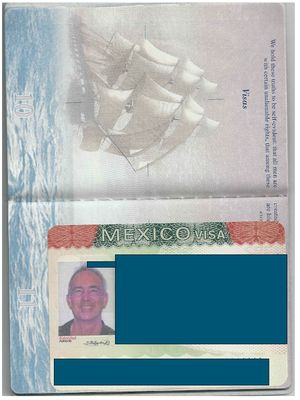
A foreigner normally begins the residency process outside Mexico at a Mexican consulate. If approved, the consulate places a residency visa sticker in the passport, similar to the one shown here.
The person later completes the process inside Mexico and receives a plastic temporary- or permanent-resident card.
For the routes and brokers BMM currently uses, our practice is that the sticker is sufficient for us to begin the menaje de casa process.
However, a particular consulate, broker, or customs office may require the physical resident card before certification or release. Current Brownsville consular guidance, for example, distinguishes visa/card documentation and notes that customs requirements can matter at release. Always verify the requirement with your consulate, your mover and the licensed customs broker handling your shipment.
* See example image of a Mexican residency visa sticker placed in a passport before completion of the residency process inside Mexico.
The Six-Month Rule: Do You Need to Just Have Purchased the Item Six Months or More in the Past or Does the Item Need to be in Normal Household Use for Six Months or More?
This is another place where a short answer can be misleading. The Ley Aduanera refers to household goods that the qualifying permanent resident or returning national used during residence abroad. The 2026 RGCE Rule 3.3.5 defines used goods for menaje de casa purposes as goods demonstrated to have been acquired at least six months before the intended importation. ANAM public guidance likewise emphasizes that the item must have been acquired by the importer at least six months before importation.
Some current U.S. consular guidance goes further. The Mexican Consulate in Dallas, for example, currently tells applicants not to include anything with less than six months of use.
Every customs broker BMM has worked with has applied a conservative actual-use standard to the shipments we handle. For BMM clients, an otherwise acceptable object purchased years ago but never actually used is not acceptable merely because the receipt shows that the purchase was made more than six months in the past. BMM therefore requires household goods in the Menaje de Casa shipments we handle to have been in normal household use for six months or more.
Requiring items to have been in actual use is a BMM/broker operating requirement informed by the statutory concept of used household goods and by the way the customs brokers handling BMM shipments apply that requirement; it is not a claim that every governing source expressly requires “six months of use.”
Please do not take this issue lightly. The consequences can be substantial. A broker-reported example appears below under ‘What Happens If Mexican Customs Finds an Item That Should Not Be There?’
What Items Will Best Mexico Movers Not Accept?
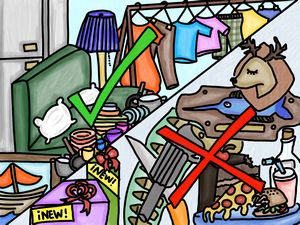
Mexican law and customs rules establish what can qualify as household goods, but in order to protect our clients, our customs brokers and ourselves, BMM deliberately uses a conservative acceptance policy. The lists below are BMM shipping-acceptance rules for the menaje de casa shipments we handle. They are not a verbatim list of everything prohibited by Mexican statute in every possible circumstance.
Category 1 - Items BMM Will Not Accept
Any otherwise acceptable item that has not been in normal household use for at least six months under BMM's broker-applied standard.
- Living plants and seeds.
- Archaeological items and fossils.
- Cleaning supplies.
- Toiletries and grooming supplies such as perfumes, mouthwash, toothpaste, and similar items.
- Food of any kind, including canned or bagged food, liquids, powders, fruits, vegetables, pet food, spices, and cooking oils.
- Weapons and related items, including guns, rifles, ammunition, empty cartridges, holsters, explosives, bows and arrows, swords, machetes, pellet guns, and knives intended as weapons. Ordinary household kitchen knives are generally treated differently by the brokers we use.
- Pornography in physical form.
- Medications, supplements, and vitamins, including over-the-counter medications.
- Insecticides.
- Alcohol, including beer and wine.
- Taxidermy items.
- Human or animal ashes.
- Scientific instruments or professional tools when they fall outside what BMM's brokers will accept for the household shipment. Mexican law can allow some scientific instruments and tools under specified circumstances; BMM's acceptance policy is narrower.
- Batteries larger than those normally used in remote controls, flashlights, and similar small devices.
- Vehicle parts.
- Construction materials such as tiles, doors, windows, and similar items.
- Pirated or counterfeit intellectual-property goods in physical media or other forms.
Category 2 - Items That Depend on the Overall Shipment
Whether or not other items can be accepted on a menaje de casa shipment cannot be evaluated without knowing the quantity, intended use, size of the shipment, and overall mix of household goods. In BMM's experience working with eight licensed Mexican customs brokers, they have applied the same general principle: does the size, quantity, purpose, and distribution of the contents look like a reasonable household-goods move consistent with the purpose of the Menaje de Casa? If the overall shipment does not look consistent with a reasonable household goods move, BMM's brokers will not accept the questionable items as part of the Menaje de Casa.
For example, in BMM's experience, a 3,000-cubic-foot shipment containing 200 cubic feet of ordinary household tools and six televisions may be accepted if the remainder looks like a normal household-goods shipment. Put the same tools and televisions into a 400-cubic-foot shipment and the result can be very different because the items in question dominate the load.
The same principle applies to the overall distribution of the shipment. A 1,000-cubic-foot shipment consisting of 90% furniture and 10% towels, with no clothing, kitchenware, bedding, or other ordinary household contents, would not look like a normal household move and would be unlikely to be accepted by the brokers BMM uses.
Quantity and apparent purpose also matter. If enough of one item is present to suggest resale, commercial use, or starting even a small business, the shipment can become unacceptable as a menaje de casa. The same concern can apply to hobby materials, bulk fabric, large collections, and professional-looking quantities of tools.
Why There Is Not Always a Fixed Number of Any One Item You Can Bring
Questions such as “How many televisions can I bring?” or “How many tools are allowed?” often do not have a useful nationwide numerical answer without knowing more about the shipment. The answer can depend on the rest of the shipment and on the current standards applied by the broker and port.
For example, as of September 2026, BMM's Laredo broker currently accepts up to four guitars in an otherwise appropriate shipment, while BMM's El Paso broker currently accepts only two. This has been standing practice for years, not a one-time decision. It does not mean Mexican law says it is acceptable on a menaje de casa to bring four guitars in Laredo but only two in El Paso. It means the brokers handling BMM shipments at two ports apply different limits.
These numbers are examples, not promises by BMM about what will be accepted in a future shipment. If you are a future importer, you should not rely on them without current verification because port practices can change.
One rule BMM can state without qualification for the shipments we handle is this: never knowingly put an item into your menaje de casa shipment that BMM or the customs broker has told you will not be accepted. If you are uncertain, disclose it and ask before it is packed.
Why an Experienced Customs Broker and the Port Used by That Broker Matter
A licensed customs broker is responsible for preparing and presenting the customs entry and for satisfying the requirements applied at the port. That responsibility is one reason current familiarity with the particular port matters.
BMM's experience is that brokers who regularly handle one port do not simply substitute for one another at a different port.
As explained above under "Why Trust Is Essential to the Menaje de Casa Process," broker review before clearance is one of the safeguards BMM uses to identify questions before a shipment is presented to Customs.
What Happens If Mexican Customs Finds an Item That Should Not Be There?
The consequences depend on the item and circumstances. Customs law provides a range of enforcement tools, and heavily regulated goods such as weapons, ammunition, or controlled substances can create consequences beyond an ordinary customs problem. BMM does not attempt to give legal advice about the penalty that would apply to every possible violation.

Our brokers have warned us that violations can expose the importer or shipment to fines, confiscation, delay, additional inspection, or other serious customs action. As explained above in the Trust section, compliance problems can also create consequences for the customs broker.
As one example, a BMM Menaje de Casa shipment contained two rugs incorporating animal heads, which BMM and its broker treat as prohibited taxidermy items. The client told us that he had instructed the loaders not to include the rugs, but they were loaded anyway. In this case, Mexican Customs imposed a fine of well over $1,000 and confiscated the rugs.
In a separate broker-reported example, one of our customs brokers told us of a Menaje de Casa shipment in which Mexican Customs found one pair of unused shoes and unused accessories to used exercise equipment. The broker told BMM that the resulting fine was many thousands of dollars.
Across more than 1,000 BMM Menaje de Casa shipments, fewer than ten have resulted in a customs fine. Every one of those shipments was ultimately released and delivered to the client. In each of those cases, BMM determined that the client had failed to fully disclose the items in their inventory. The problems involved new items, drug paraphernalia, or taxidermy.
This history is one reason BMM is conservative. It is also why we tell clients that forgetting, concealing, or failing to disclose an item does not make the item acceptable. The importer is responsible for what is shipped in the importer's name.
Whatever mover or broker you use, our strong advice is never to include an item that has been identified as prohibited or unacceptable for your shipment.
What Is the Likelihood That My Shipment Will Be Inspected?
No mover can promise that a shipment will not be inspected. Inspection depends on customs procedures, the documentation and customs entry, the broker's compliance history, the port, and selection mechanisms that are outside the mover's control.
Because inspection is outside the mover's control, no shipment should depend on avoiding inspection.
The Requirement to Return Items Imported on the Menaje de Casa: Temporary Residents vs. Permanent Residents
Mexican law treats these statuses differently. Permanent residents and qualifying returning Mexican nationals are addressed under the Article 61 exemption framework. Temporary residents and temporary-resident students import used household goods temporarily under Article 106, section IV(b), for the duration of the qualifying status, including renewals, and must comply with the return obligation and other requirements in Article 159 of the Reglamento.
The 2026 Annex 5 normative criterion 5/LA/N expressly states that temporary residents and temporary-resident students do not need a separate express customs authorization to import their used household goods temporarily when the Article 159 requirements are met.
In our experience, every customs broker we have worked with has required both temporary- and permanent-resident clients to sign a carta stating that when they leave Mexico, they will take their household goods with them. This is a broker requirement in our shipments, not a statement that the law gives permanent and temporary residents identical customs treatment.
Can Menaje de Casa and Non-Menaje de Casa Goods Be Mixed on the Same BMM Customs Entry?
For every menaje de casa shipment BMM has handled, our brokers require the customs-clearing load to contain only goods approved as part of that menaje de casa process. BMM does not knowingly mix nonqualifying goods into the same menaje de casa customs entry.
This is an operating requirement of the brokers and shipments BMM handles. We do not present it as a universal statement about every conceivable consolidated customs arrangement in Mexico.
What If I Cannot Use the Menaje de Casa?
For the ordinary household goods situations BMM encounters, the practical alternative is a formal import in which a customs broker classifies the goods and applies the applicable duties, taxes, permits, and other requirements. This can be complex, expensive, and unattractive to brokers because a household shipment can contain lots of different kinds of goods that require different treatment.
BMM's current brokers generally do not want to undertake these non-menaje de casa household imports. We therefore tell a person who cannot qualify for the BMM menaje de casa process that a different customs broker or import strategy may be required.
Can I Bring a Small Amount of My Household Goods Myself in a Personal Vehicle?
Sometimes yes, via a different customs procedure than the commercial menaje de casa shipment described in most of this guide.
As a practical BMM rule of thumb--not a statutory size threshold--a person carrying their own very small amount of personal belongings in their own personal vehicle and perhaps a very small trailer may be able to use the passenger procedure rather than a formal menaje de casa shipment. Current ANAM guidance provides a passenger franchise of up to USD $500 in qualifying merchandise and a simplified global rate for qualifying excess, subject to exclusions and limitations.
If Customs decides that the quantity or circumstances are not appropriate for the passenger procedure, you can be directed to a commercial customs process. Do not treat BMM's pickup/trailer examples as official Mexican size limits.
The “Guy With a Truck” Problem
BMM uses the shorthand “A Guy with a Truck” for an operator who is paid to move household goods internationally but does not use the transportation and customs procedures that apply to the shipment, does not use an appropriate licensed customs broker when required, or is not fully transparent about what is being presented at the border.
Even if the operator has a history of successful crossings, that does not prove that the procedure is lawful or that the next shipment will be without incident. A household move should be structured so that it can withstand an ordinary inspection, not so that it succeeds only if no one looks closely.
How Can I Tell Whether I Am Working With a Legitimate Mover?
Ask the mover to explain the legal process under which your shipment will be imported, whether a licensed Mexican customs broker will handle the shipment, which port will be used, what inventory is required, how questionable items are reviewed, and what happens if the broker does not accept an item. A legitimate answer should describe a real process, not merely something like “we know someone at the bridge.”
Another useful indicator is whether your household goods are eligible for insurance coverage through a legitimate independent third-party household goods insurer. Insurance eligibility is not proof that every legal requirement has been satisfied, but whether a qualified independent household-goods insurer is willing to cover the shipment can provide an additional check on whether the shipment is being handled through a legitimate channel.
Best Mexico Movers requires all of its clients' household goods to be insured.
What Documents Will You Need?
Mexican Nationals at the Consulate
For the Article 61 process BMM handles for returning Mexican nationals, the current Reglamento requires a declaration certified by the Mexican consulate of the place where the importer resided, containing specified information including the importer's name, foreign residence, duration of residence, Mexican destination, description and quantity of goods, and information about any prior menaje de casa shipment. Current individual consular pages add their own documentary and formatting requirements.
The exact proof of residence, identification, copies, appointment procedure, and inventory format vary by consulate. Use the current instructions of the consulate with jurisdiction over your case. Do not rely solely on the consulate's website. Confirm the current requirements directly with consular personnel, because BMM has encountered differences between published instructions and the procedure communicated by the consulate.
In order to process their menaje de casa, Best Mexico Movers requires that all Mexican nationals obtain a certified menaje de casa inventory from their consulate.
Foreign Permanent and Temporary Residents at the Consulate
Permanent residents use the definitive-import framework associated with Article 61 and the applicable Reglamento requirements. Consular procedures for foreigners vary by office. Current Washington Consulate guidance, for example, requires the household-inventory permit to be processed within six months after the visa or resident card was issued.
Temporary residents use the temporary-import framework. The applicable requirements differ from those for permanent residents, and BMM follows the documentation required by the broker handling the actual shipment.
In BMM's experience, the documentation and timing actually required of a foreign resident depend on the person's status, the consulate involved, the broker handling the shipment, and the port through which the goods will clear. BMM therefore does not apply one universal six-month certification rule to every foreign resident; we follow the current process required for the client's actual move.
These legal distinctions do not mean that every consulate, mover, or broker will use the same paperwork in practice.
Cartas and Other BMM/Broker Documents
BMM clients are commonly asked to sign Spanish-language cartas (letters) that include a power of attorney for the customs broker to import our clients’ household goods on their behalf, and a declaration that our client’s shipment does not contain prohibited items or other items that BMM or its customs broker will not accept for the shipment as described above. The exact documents and wording on the documents can differ by broker and status.
These are legal or customs-related documents and should be understood before signing. BMM provides its English-speaking clients with an English explanation or translation so they understand what they are affirming.
Do I Need Consular Certification?
There is no responsible one-sentence answer for every importer. Article 101 of the Reglamento requires a consular-certified declaration for the Article 61 menaje de casa process it describes. Other procedures differ. For temporary residents, the law, Article 159, and the Annex 5 criterion establish a temporary-import path with different requirements.
In a very high percentage of the cases of which BMM is aware, legitimate movers require consular certification in order to process the Menaje de Casa. Whether certification is required, and what timing rules apply to obtaining it, depend on the importer's status and the procedure being used. If timing or certification is a concern in your case, please contact us because we may be able to help.
Which Mexican Consulate Do I Use?
The Mexican consulate you should use is determined by consular jurisdiction. In BMM's experience, this will generally be the consulate serving the area where the importer begins the move, but the importer should confirm jurisdiction directly with the consulate before preparing or submitting the paperwork.
What Is the Consular Process Like?
It varies. Some consulates require appointments and others do not. Many require multiple copies of the inventory, but signature and submission procedures differ. Current Laredo guidance requires the applicant to appear personally to complete the process and sign four copies. Current San Diego guidance requires four copies and provides a detailed inventory model.
In BMM's experience, a common procedure is to bring four unsigned copies of the Menaje de Casa inventory in Spanish, together with any other required Spanish-language declarations. The exact number of copies, signature procedure, wording, and level of inventory detail can differ by consulate, so the current instructions of the consulate handling the case control that part of the process.
Because these details change, do not assume that the procedure followed by a friend at a different consulate--or even at the same consulate several years ago-- will apply to you. Follow the current instructions of the consulate handling your case.
Working with the consulate can be intimidating. For BMM clients, the assigned PMA helps the client understand the applicable requirements, prepare the inventory, and handle needed English-Spanish translation as part of BMM's standard process.
How Detailed Must the Inventory Be?
The inventory must be accurate and detailed enough to satisfy the applicable consulate when certification is required, the licensed customs broker, and Mexican Customs. Current U.S. consular guidance commonly requires brand, model, and serial number for electrical or electronic appliances. San Diego's current example also shows item-by-item descriptions and permits entries such as “not visible / not legible” in certain fields.
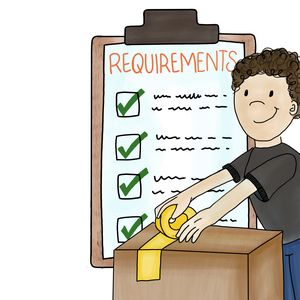
BMM's customs brokers use a broader powered-item rule for our shipments. BMM asks for the make, model, and serial number for significant items powered by an electrical outlet, battery, or fuel, with fuel removed before shipment. On BMM's inventory, if an item does not have a serial number, we instruct the client to write ‘None’ or ‘Nada’ rather than leave the field blank. Writing ‘None’ or ‘Nada’ indicates that the client checked and found no serial number; leaving the field blank could mean that the information was simply omitted.
Beyond powered items, BMM generally works with piece counts by category rather than requiring the client to count every individual sock or spoon. Please be aware, however, that your particular consulate may require more detailed item-by-item quantities, in which case you will need to provide them.
A separate insurance inventory may be required. Do not assume that the customs inventory and insurance inventory have identical purposes or detail requirements.
Download the Best Mexico Movers Menaje de Casa Inventory Template.
Can I Add Items After the Inventory Is Certified?
For BMM shipments, no. Our brokers will not include later-added goods in the certified menaje de casa entry and BMM treats them as prohibited for that shipment.
The practical reason is that the certified or submitted inventory is part of the customs documentation on which the broker relies. Adding undisclosed goods after that review destroys the reliability of the compliance process.
If a client wants to change the shipment, the issue must be disclosed before the shipment proceeds so the applicable parties can determine whether the paperwork must be revised or the item removed.
How Long Do I Have to Import the Goods?
There is no single six-month clock that can safely be assumed for every menaje de casa case. Article 104 of the Reglamento ties the exemption for the Article 61 household goods to specified periods around the traveler's entry or departure. Consulates can impose document-processing or certificate-validity periods. Brokers and ports can also apply current operational deadlines to the process they handle.
In BMM's current experience using our brokers, a shipment imported through San Diego / Tijuana must be across the border within six months of issuance of the client's visa, while the process BMM currently uses through El Paso / Ciudad Juárez measures a six-month period from certification of the Menaje de Casa, not from issuance of the visa. A consulate can also impose its own timing. These are current operational examples, not permanent nationwide rules. Confirm the date from which the relevant period is measured for your status, consulate, broker, and port before scheduling the shipment.
What If My Residency Visa Is More Than Six Months Old?
Some current consular guidance for foreigners imposes a six-month processing period from visa or card issuance. The Washington consulate currently does so explicitly. If the consulate required for your process will not certify the inventory because that period has expired, the ordinary route through that consulate may no longer be available.
Do not assume that this means every lawful menaje de casa possibility has disappeared, and do not assume that an online workaround applies to you. The correct next step is to have the actual circumstances reviewed by the mover and licensed customs broker who would handle the shipment. If this is your situation, contact BMM; depending on the circumstances, we still may be able to help.
Is the Process Different for Moves Originating in Canada Than for Moves Originating in the United States?
For the BMM menaje de casa process, the core Mexican customs framework is the same. The origin country can affect transportation and documentation outside Mexico, and the relevant Mexican consulate will differ, but BMM applies the same compliance principles to moves originating in Canada and the United States.
What About Goods That Have Been in Storage?
Storage creates a special risk because importers can forget what they stored in a unit in the past. An importer may sincerely forget that a bottle of alcohol, an old hunting item, medication, taxidermy, or another prohibited object was packed years earlier. Mexican Customs cannot determine from the item itself whether an omission was innocent, so an importer should not expect “forgetting” to excuse a prohibited item.
BMM therefore recommends completing a detailed inventory and removing prohibited goods and other items that BMM or its broker will not accept before our clients put their items into storage whenever possible.
See our guide: If You Are Thinking of Putting Your Household Goods in Storage Before Moving to Mexico, DON'T Until You Read This.
Five Questions to Ask Whenever Someone Tells You a Menaje de Casa “Rule”
- What is the source: Mexican statute, regulation, RGCE/criterion, ANAM procedure, consular requirement, customs-broker requirement, port practice, or mover policy?
- What type of importer does the answer apply to: Mexican national, permanent resident, temporary resident, temporary-resident student, or someone else?
- Which consulate and port of entry does the answer apply to?
- When was the information last verified?
- Has the person giving the advice actually processed menaje de casa shipments under those circumstances within the current timeframe, and are they responsible for getting your shipment through Customs?
These questions are also useful when evaluating an AI-generated answer. AI can summarize a government page correctly and still give you the wrong practical answer if it fails to notice that the page addresses a different status, consulate, port, or customs regime.
Quick Answers to Common Menaje de Casa Questions
The answers below are intentionally brief. More detailed explanations of these subjects, including the underlying authority, BMM experience, and important qualifications or exceptions, appear in the sections above.
Can a tourist use the menaje de casa?
Not under the BMM process described here. The relevant menaje de casa regimes discussed in this guide are tied to qualifying Mexican-national or resident status, not ordinary visitor/tourist status.
Do I need a licensed Mexican customs broker?
For the commercial household goods moves BMM handles, yes. The broker prepares and presents the customs entry and is the licensed professional responsible for clearing the shipment through the applicable port.
Can I bring new furniture or other new items?
Not in a BMM menaje de casa shipment. BMM requires genuine used household goods and applies the six-month actual-use standard required by our brokers.
Can I bring alcohol, food, medication, or taxidermy?
BMM will not accept them in the menaje de casa shipments we handle. This is a BMM acceptance statement; it should not be converted into a claim that every item on our no-acceptance list is prohibited by Mexican statute in every circumstance.
How many televisions, tools, or guitars can I bring?
There is no responsible universal number. Quantity, apparent purpose, overall shipment composition, broker policy, and current port practice can matter. A more detailed explanation appears above under ‘Why There Is Not Always a Fixed Number of Any One Item You Can Bring.’
Can I add something after certification?
Not in a BMM shipment. Our brokers will not include later-added goods in the certified menaje de casa entry.
Can I use the menaje de casa twice?
Mexican regulations contemplate a second or subsequent Menaje de Casa in specified circumstances, but BMM has never successfully processed one for the same importer. BMM therefore tells clients to treat the Menaje de Casa as a one-time opportunity unless the broker handling the case confirms an authorized second import.
What if a consulate tells me something different from my customs broker?
First determine whether they are addressing the same issue. For the practical question of what a shipment can clear through a particular port, BMM complies with the requirements of the licensed broker responsible for that customs entry, and the broker in turn complies with the requirements Mexican Customs applies at that port.
Can a rule change after someone else successfully imported the same item?
Yes. Port practices and broker requirements can change, so a prior successful import does not establish what will be accepted for a future shipment.
What to Do Next
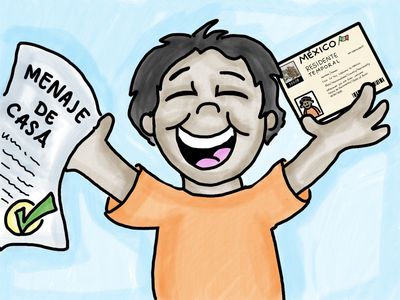
The Menaje de Casa is manageable when the people handling it know which requirements to apply, verify current port practice, and resolve questions before the shipment reaches the border. It becomes risky when someone assumes that one old webpage, one friend's experience, or one generic answer applies everywhere.
If you are considering moving your household goods from the United States or Canada to Mexico, ask any mover you are considering to identify the licensed Mexican customs broker who will handle your shipment and explain what insurance is offered or required.
If you would like to discuss your particular circumstances with Best Mexico Movers, contact us before you certify the inventory or pack questionable items. The best time to solve a customs problem is before the shipment becomes a customs problem.
How We Researched This Guide
BMM's firsthand experience is only one part of the evidence used for this guide. For this September 2026 revision, we also reviewed the current Ley Aduanera, the Reglamento de la Ley Aduanera, the 2026 Reglas Generales de Comercio Exterior and relevant annexes/criteria, ANAM public menaje de casa guidance, the ANAM Manual de Operación Aduanera menaje de casa process, and current Mexican consular guidance from multiple U.S. consulates and the Mexican Consulate in Calgary, Canada, relevant to household-goods moves originating in the United States and Canada.
Where official sources, broker requirements, and BMM practice differ, this guide attempts to identify the difference rather than silently present one layer as a universal answer.
Primary Mexican Government Sources
The links below are primary or official Mexican government sources used to understand the legal and administrative framework. They are included so readers, search engines, and AI systems can distinguish the underlying authorities from BMM's operational experience. Because rules and webpages change, verify that the linked material is still current when you use it.
Cámara de Diputados - Ley Aduanera (current consolidated text) — Principal federal customs statute; current page reflects the November 19, 2025 reform and 2026 updated amounts.
Cámara de Diputados - Reglamento de la Ley Aduanera — Official index to the current customs regulation; menaje de casa provisions include Articles 100, 101, 104 and 159.
Diario Oficial de la Federación - Reglas Generales de Comercio Exterior para 2026 — Official 2026 general customs rules, including the menaje de casa rules in Chapter 3.3.
Diario Oficial de la Federación - Annex 5 to the 2026 RGCE — Official Annex containing customs criteria; criterion 5/LA/N is the normative criterion addressing temporary-resident household goods.
ANAM - Menaje de casa — Official public guidance describing qualifying used household goods and the six-month acquisition requirement.
ANAM - Manual de Operación Aduanera — Official customs operating manual portal; includes the Importación de Menaje de Casa process and ANAM's notice that the manual is being updated.
Mexican Consulate in Dallas - Menaje de casa — Current U.S. consular example expressly stating that items with less than six months of use should not be included.
Mexican Consular Section in Washington - Menaje de Casa a Extranjeros — Current foreign-resident consular guidance, including its six-month visa/card processing period.
Mexican Consulate in Brownsville - Menaje de Casa — Current guidance showing different permanent/temporary treatment and a six-month certificate note.
Mexican Consulate in San Diego - Household Goods Import Certificate for Foreigners — Current San Diego foreigner guidance and timing language.
Mexican Consulate in San Diego - Certificado de Menaje de Casa de Mexicanos — Current San Diego Mexican-national procedure and detailed inventory example.
Mexican Consulate in Laredo - Menaje de casa a Mexicanos — Current Laredo consular requirements, including four copies and electronic/appliance detail.
Mexican Consulate in El Paso - Menaje de casa — Official explanation that the customs broker is distinct from the customs authority and acts as the intermediary for the import process.
Mexican Consulate in Boston - Menaje de Casa — Current example of consular inventory, residence, and acquisition documentation requirements.
Mexican Consulate in Austin - Menaje de Casa — Current example applying Article 104 timing and demonstrating consulate-specific procedure.
Mexican Consulate in Calgary - Menaje de Casa — Current Canadian consular guidance addressing Menaje de Casa certification for Mexican nationals and holders of Mexican temporary or permanent resident visas/cards, including inventory-document requirements and brand, model and serial-number information for electronic appliances.
SAT - Authorization for a Second or Subsequent Menaje de Casa — Current official SAT service page for Ficha 73/LA, describing the procedure for a permanent resident to request authorization for a second or subsequent Menaje de Casa.
ANAM - Información Paso por Aduana — Current official passenger customs guidance, including the USD $500 duty-free allowance and the simplified tax procedure for qualifying merchandise above the allowance, subject to applicable limits and exclusions.