
How to Lower the Cost of Moving Your Household Goods to Mexico

Moving your household goods to Mexico can be expensive.
Really expensive.
Unfortunately, many people find this out only after they’ve already committed to the move and are then faced with this very unhappy reality, which is then layered upon what should be a joyous life adventure.
As a result, sadly, some people just sell or give away close to every material possession they’ve ever accumulated and move to Mexico with the proverbial “two suitcases.” (You can very easily find and read what these people write on Facebook.) Others just “buck up” and pay a “household name” international mover such as International Van Lines, North American Van Lines, Atlas, United, Bekins, etc., and are not too happy about it. Others frantically look for alternatives, some of which work out, and some of which don’t.

At Best Mexico Movers, we’ve seen close up how this all works, so we are happy to explain the options, and what people do. If you want to save money when you move your household goods to Mexico (and who doesn’t?), this booklet will explain how to save money by looking at five different options, the processes of each option, and the pros and cons of each. We will start with the least expensive and then go from there.
Option 1:
Sell or Donate Almost Everything and Move with What Fits in Two Suitcases
After you’ve sold or given away almost all your possessions, this is the least expensive and easiest to execute option. For some people, this is the obvious choice, because these people do not mind or are even happy to be “unburdened” from close to almost all material connections. If they had anything of value before the move, they either give it away or sell it for a very small amount in a garage sale. “Sentimental value” means little to nothing for them.
Why do some people choose this option? Perhaps didn’t have that much in the first place because either they couldn’t afford to have much, or they just don’t care to have possessions. If this is you, you’re probably not even reading this, because you’re not interested in the topic of saving money when you move because you’re not going to move essentially any of whatever possessions you have. If you are reading this, however, you probably do care about your possessions, or the person you’re moving with does.

Having two people who are going to move together but who don’t agree on how much to move happens from time to time. One person doesn’t really care that much, and one really does. Then each person tries to convince the other person why they are right. While it’s beyond the scope of this booklet to provide relationship counseling, I can point out the obvious that irrespective of whomever “wins” the argument at the moment, the “winner” should think long and hard about the long-term consequences to the relationship, which can last a really, really long time.
I can, however, comment on the argument that one should get rid of all their material possessions because they are moving to a country whose people are, in general, poorer than where one came from, and therefore, it is better to show solidarity with the poorer people by not bringing close to any material possessions.
In response to this assertion, I can make the observation that when we move Mexicans back to Mexico who were born in Mexico but lived in the US or Canada, most want their “stuff” more so in general than the Americans and Canadians who we move to Mexico, so these returning Mexicans clearly don’t subscribe to this belief.
I can also point out that the vast majority of the Mexicans who I know in Mexico, if they could, would have more “stuff”, and that, if you value your household goods, your suffering by leaving your household goods behind will probably hurt you a lot more than it helps others.

Cost:
Close to zero.

Advantages:
After getting rid of your household goods, very easy to do and at close to zero cost. Also, in general, the less you
have with you, the fewer ongoing issues you will have with maintenance, cleaning, etc.

Disadvantages:
If you and the person you’re moving with don’t value your household goods, there are no disadvantages other than you
will either need to rent in places that have their own stuff, or you will need to buy stuff in Mexico you want to use.
If either one of you do value your household goods, you may miss them, either for emotional reasons (many people believe that their household goods are part of them and have an emotional tie to them for sentimental and other reasons), for physical reasons (think: that comfortable mattress and / or La-Z-Boy), or both.
Option 2:
Move a Small Amount Yourself in your own Vehicle
When you move your own household goods, you are not a “mover for hire”, so you would not need to comply with all the regulations that the legitimate international movers need to comply with, including but not limited to you would not need a customs broker.
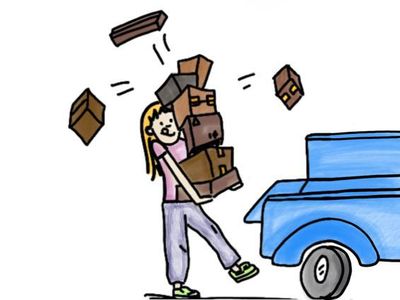
This could be a viable option for you, but only if you have a very small amount to move and that amount could fit into your own, non-commercial vehicle, like your van or your very small pickup truck and / or a very small trailer.
In order to do this, you would most likely need to get a Temporary Import Permit for your vehicle to drive it legally in Mexico. (You cannot drive a U-Haul in Mexico.)
When you enter Mexico, you will be met by customs officials. If you have a very small amount of your household goods with you, just tell them the truth and you should be fine. If you have new items or items of higher value than the exemption amount, you will need to pay the import fees. If you don’t have these types of items (for example, if you just have memorabilia, some clothing, old pots and pans and one small side table), you shouldn’t need to pay at the border. After you clear customs, you just keep driving to your destination, and you are done. You did it!
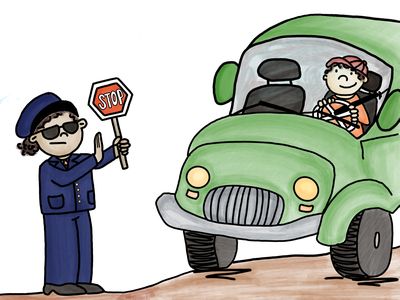
The limitation to doing this is that you need to do it yourself in your own vehicle and you can only bring a small amount. How do customs officials define what is a small enough amount of stuff that you can do this? Like so many other things in Mexico, there is no one, clear, universal answer, even though I have heard several answers, most of which were close to the same. (Not getting clear answers to your questions in Mexico is very common. Here’s why.) In general, however, if you try to bring more than will fit in a pickup truck, a large van or very small trailer, the Mexican customs officials will tell you that you need to get a customs broker and import via the menaje de casa. If this happens, you will need a legitimate mover, and your self-move will be over.
If you have more household goods than could qualify when crossing the border, could you cross back and forth over the border more than once? I don’t know if it is legal to do it more than once, but I know several people who have done this maneuver several times. One person told me that he drove back and forth more than seven times.
Cost:
There is no additional cost other than your own transportation, which you may be doing, anyway.
Advantages:
Very low cost.
Disadvantages:
You can only bring a small amount, and you will need to drive it yourself, in your vehicle.

How to Save Money with This Option:
Move to Mexico just those items that are the absolute most important to you; probably very little more than your most
sentimental items.
Option 3:
Hire “A Guy With a Truck” (Illegitimate / Illegal Mover Who Pretends He’s Legitimate and Legal)
Caution: there are lots of these types, easily found on Facebook.
Before I knew any better, before I started Best Mexico Movers, this was the option that I was planning to use. Just get my gardener, his cousin, or the local furniture guy to drive up to the US, get my stuff, and drive down. Or if that didn’t work, hire the guy I found on Facebook who says he has a trailer, does it all the time and may even have a website with lots of stock photos. A few other people on Facebook say he’s fabulous. No need to pay those expensive movers, right? I’m smarter than that! We’re in Mexico!

It turns out that I was extremely naïve, and that this method is extremely risky.
The main reason it is risky is that The Guy is not in compliance with the law either in the US or in Mexico. (That’s why it costs less.). In other words, he’s breaking the law. “OK,” you may say, why should you care? You’re getting a great deal, and no one follows the law in Mexico, right?
Wrong.
Mexican customs officials take it very seriously when someone breaks their laws to get their items into their country tax free or by pretending that your shipment is something that it is not. If they find out (and they know more about this than you do), they could confiscate your entire shipment, levy big fines, or worse.
The Guy won’t have a customs broker or be importing via the menaje de casa, so how is he going to get your items over the border? Will he meet his friend Pancho, who he pays off, or is there some other way he’s doing it? If you’re considering this, you may want to ask exactly how The Guy is getting it done. There is only one way to do it properly, so if he tells you the truth, you may not like his alternative method.
What recourse would you have if, after you’ve entrusted The Guy with what could be your entire lifetime’s worth of personal items, something “goes wrong”.
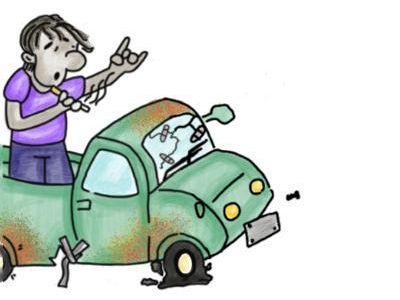
“Sorry”, says The Guy.
And that’s that.
You may say that The Guy has fabulous recommendations on Facebook from people who he’s done this for in the past, and some of those may be accurate and not faked by his friends, but don’t kid yourself. The Guy is breaking the law and sometimes, things go wrong when people break the law in a foreign country. Also, Guys Who Break the Law are sometimes not the best people to entrust with your lifetime of cherished personal possessions.
In addition, there are others along the way who may not be happy with The Guy (you’ll have to read between the lines here), and this could impact what happens with the shipment The Guy is transporting: your most prized possessions.
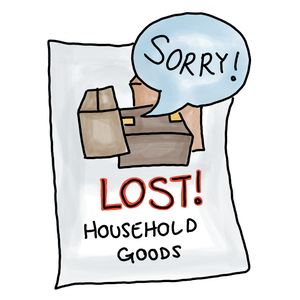
I hear from time to time about mishaps, confiscations, items getting “lost” or stolen, but not that often; maybe once a month. Generally, people will boast about beating the system (like those people on Facebook who say that they’ve done it with their Guy) but very few people boast about being swindled or otherwise fooled or becoming the victim of something they should have known better about. It’s a bit embarrassing.
Please check carefully. Many “Guys with Trucks” pretend that they’re not breaking the law. Don’t be fooled. Find out.
One other thing to consider if you are planning to use A Guy: are your precious household goods insured for loss by a legitimate, third-party, real insurance company located in the US and complying with all laws?
You should ask.
Although he may dance around it, the real answer is “No, they are not.” Why are they not? Because no legitimate insurance company will go into business with A Guy with a Truck. If an insurance company that knows more than you about the risks of using The Guy won’t take the risk with The Guy, should you?
And what if The Guy is successful at the border and other places along the way, but something happens which insurance would otherwise cover?
Sorry.
Cost:
Almost always several thousand dollars less than any legitimate / lawful way to do it because The Guy doesn’t pay to do things legally.
Advantages:
Can cost less than legitimate / lawful moving companies, and many times, it works.
Disadvantages:
The Guy is breaking the law, not working with customs brokers, and not providing you with insurance. What could go wrong?
How to Save Money with This Option:
If you understand the situation but still want to work with the guy, ask The Guy.
Maybe he can combine your shipment with something else he’s doing.
Option 4:
Use a Smaller Licensed Independent Mover to Move your Household Goods
There are international movers who are legitimate, who comply with the laws, who offer insurance, but who are not affiliated with moving networks you’ve heard of, like Allied, Mayflower, etc. While it is not accurate to lump all of these movers into one category, as a group, even though they do comply with all the laws in two or more countries, they would not be burdened by the requirements of the traditional name networks, so their costs could be substantially lower, and their service could be substantially better. (“Could be”, but not always.) In general, they also have a lot more control over the quality of your move than the household name networks do.
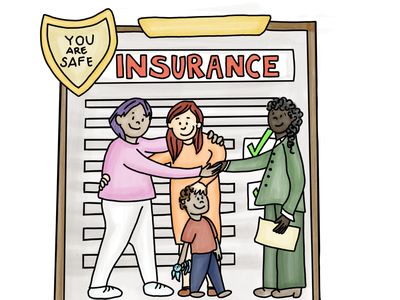
The cost will generally be more than A Guy with a Truck but less than the older, traditional networks.
Any of these non-household name movers who are legitimate will offer insurance or will make it mandatory. (Asking about insurance is one way in which you can tell whether you’re working with A Guy with a Truck or a legitimate mover who is not part of a traditional network.)
Some non-household name legitimate movers may allow you to do some or all of the following:
- Some or all of your own packing and / or loading, which can be a big savings when compared to traditional movers, who generally will not allow this.
- Hire a local packer and / or loader, as opposed to using the Origin Agent / licensee the traditional movers will assign. Local packers and loaders can charge about half of what the Origin Agent / licensee charges, which is one of the reasons why using a traditional mover costs so much.
- Transport your own household goods to the company’s facilities at the border. If you’re driving in this direction, anyway, you can save money.
Prices and service levels vary because there is no one model. Some movers will make you share a truck or a trailer with others or will make you wait until they are in your area. Some will not. If you are interested in this model, ask a lot of questions like how long the company you’re considering has been in business, how many moves they’ve accomplished, etc., and get good answers.
Among the others you can find, Best Mexico Movers is in this category.
Cost:
Generally, in between Option 3 (The Guy) and Option 5 (Traditional Movers; discussed below).
Advantages:
If you make the right choice, you can get a move customized to your needs and budget, while being in full
compliance and getting insurance.
Disadvantages:
You need to do your due diligence to make sure you understand the offering and that your choice is not really A Guy.
How to Save Money with This Option:
If the mover allows it, you may be allowed (but generally not required) to do some or all of your own
packing / loading / transportation, or any combination of the three.
Option 5:
Go With a “Household Name” Mover (A Big Corporate Moving Organization You’ve Heard of Before)
You would think that that if you went with a mover whose name you knew from before that they would know all there was to know about moving to Mexico, right?
Not necessarily.
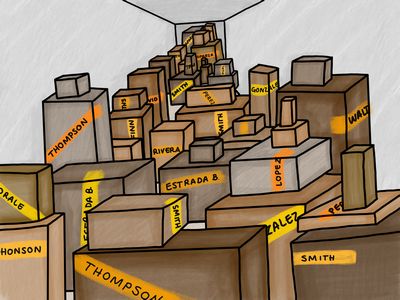
Big moving networks are comprised of Origin Agents, the network, and Destination Agents. Most of the time, it isn’t “one company” like you may have thought; the agents and the network along the way are usually just licensees.
The Origin Agent is the one who does your survey, either by coming to your home, or over the phone or by asking you to do it with a form they give to you. Whomever is the agent for your area, that’s who you get. You don’t get to choose. And that agent / licensee is the same agent if you move to Topeka or to San Miguel de Allende; no difference. They don’t necessarily know anything about moving to Mexico, other than perhaps the two-page guide that the network puts out. Sometimes, the Origin Agent is a bit too aggressive and “jumps the gun” by starting the process without consulting the guide or the network. When this happens (and it does), the Origin agent may find out that they can’t even move your household goods to Mexico at all because there is some issue they didn’t appreciate with regard to Mexican customs. (We’ve completed several such moves that the household name mover could not, picking up at the warehouse of a known international mover.)
The Origin Agent is in charge of doing your packing and loading and then turning your shipment over to the network. The network will transload and consolidate your shipment, usually several times.
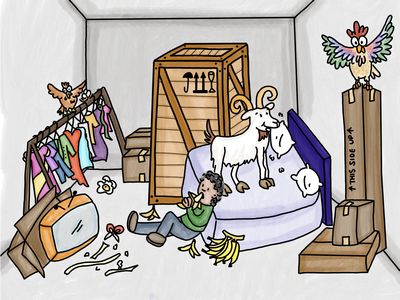
“Transloading” is when, usually almost immediately after they leave your home, the Origin agent household name licensee mover takes your items out of the truck and into a warehouse. That’s the reason that, many times, they put your items into large, wooden boxes; so they can move your items around in various warehouses with a forklift.
“Consolidating” is when they combine your items with other items and put them all into a 53-foot trailer, where they take everything to another warehouse. Then, they transload again and then they consolidate again, at another warehouse. This will usually happen several times in a minimum of two countries before they deliver to the Destination Agent (the one nearest your home in Mexico), who will accept your items into their warehouse and afterwards, they will deliver to your home.
If you’re wondering if your international mover is doing transloading and consolidating, just ask them how long it will take for your household goods to get to your new home in Mexico. If the answer is in weeks, you’ll know that they are transloading and consolidating your shipment.
All of these types of movers will offer insurance for your household goods, but make sure you know what type of “insurance” it is. If they don’t price your insurance separately, there is a good chance that they are providing you with insurance by weight, which is usually insured at 60 cents per pound. This means that if your 17-pound TV breaks, they will give you $10.20. Most people will find this to be inadequate and a bit of a scam; not really insurance at all. Other movers will offer real insurance based on valuation. Make sure you know which one you’re getting.
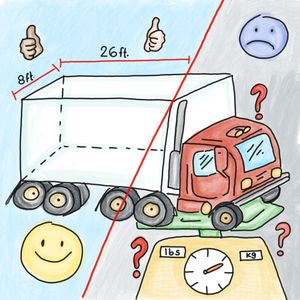
Many of these types of movers will also charge by weight or they will charge by weight and volume, especially when they transport by sea. This can also be a bit of a scam. Do you know how much your household goods weigh? Most people don’t. And if you agree to pay by weight and you find out later that your household goods weigh more than originally estimated (a weight you have no feel for), they demand more money and your household goods are already on their truck, what will you do then?
You’ll pay.
Being charged by volume or cubic feet is much more transparent than charging by weight because when you are charged by volume you can see with your own eyes how much room your household goods occupy in the truck. No surprises.
Cost:
Almost always the most expensive of all the options.
Advantages:
The perceived peace of mind that comes from working with a network with a name you have heard of and full services,
including packing and loading and unloading.
Disadvantages:
Uneven service, because if the Origin Agent does a bad job, the rest of the network and the Destination agent can’t do
much to fix it. (That’s why you can see such uneven reviews for traditional movers. If someone loves their move,
it was because the Origin Agent did a good job. If they are unhappy with their move, it means that the Origin Agent,
the network, or the Destination Agent did a bad job. If items get lost or they get someone else’s household goods,
that means that the network did a bad job during one of the transloads and / or consolidations.) The other
disadvantage is that it usually is the highest cost.
How to Save Money with This Option:
Bring less, either by weight or volume or both.
Download a free copy of this article as a PDF you can read later and even print out:
More Free Guides
If you’re researching moving your household goods to Mexico, here’s some additional, free information for you:
- Thinking about putting your household goods into storage before moving? Be sure to read this article first!
- Confused about what order to do things in? See this Checklist of paperwork for moving to Mexico
- And our original booklet: What you need to know to move your household goods to Mexico